
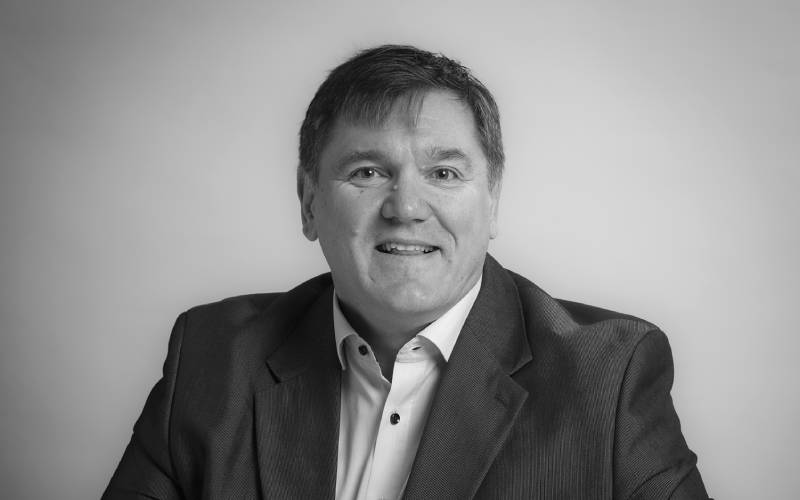
Philippe Wieczorek takes the helm at MIAI

With Philippe Wieczorek taking the helm, MIAI is entering a decisive new phase. Drawing on extensive experience in innovation and industry, he aims to strengthen ties between research, education and business, while consolidating the new MIAI Cluster’s role within the regional ecosystem.
A graduate engineer from INSA Lyon, Philippe Wieczorek has worked in North America and in a wide range of professional environments, from small businesses to major groups such as Capgemini and HP in Grenoble. After joining Minalogic in 2012, he was closely involved in the creation of MIAI, well before its official launch. His appointment builds on the work initiated by Éric Gaussier, with a clear determination to strengthen the industrial momentum surrounding AI.

With the creation of the MIAI Cluster, funded by France 2030 through the French National Research Agency (ANR) and led by Université Grenoble Alpes (UGA), the institute is entering a new dimension. With a budget of €70 million, it now encompasses Université Savoie Mont Blanc and Université Clermont Auvergne, strengthening its regional roots and paving the way for new partnerships, including cross-border collaborations.

Research, education and innovation: a strengthened strategy

MIAI’s three pillars remain unchanged, but its ambitions are growing. In research, the institute plans to fund between 60 and 65 new chairs, in addition to the 78 already supported since 2019. These are expected to generate around 100 scientific jobs over the coming years.* Its strategic priorities are evolving while maintaining continuity: trustworthy AI, sustainable and resource-efficient AI, and key application areas such as energy, industry and healthcare.

Education is a major priority for Philippe Wieczorek. He wants students from all disciplines to acquire a basic understanding of artificial intelligence, enabling them to grasp its uses and implications. MIAI supports traditional degree programmes, international scholarships and educational resources for teacher training, while also offering certificate programmes. The Fidle online course attracts nearly 4,000 participants each year and is complemented by innovative formats such as podcasts and the interactive show AI on Trial.

Better support for businesses and a more structured ecosystem

To strengthen its ties with industry, MIAI is preparing to create a team of application engineers dedicated to analysing companies’ needs, developing prototypes and directing businesses towards the most relevant experts. This impartial approach is intended to help companies look beyond a vision of AI limited to generative AI and identify solutions that are genuinely suited to their challenges.

The institute also plans to expand its outreach and visibility initiatives. Following the success of Law and AI Week, Philippe Wieczorek is considering extending the format to other fields to raise Grenoble’s profile. The development of AI for science is another priority, particularly in a region accustomed to processing vast volumes of data.

At a time of intensifying global competition, Philippe Wieczorek stresses that France must sustain its efforts if it is to remain in the race. His message to businesses is unequivocal: developing AI skills has become essential, and MIAI is ready to support them through this transition.

* The figure of 78 includes the chairs funded through the 3IA programme (42) and the first wave of chairs funded by the MIAI Cluster (31 chairs, plus five chairs for early-career researchers). In total, MIAI will fund between 100 and 110 research chairs over a ten-year period.


Recueil d'articles