

ExoSPY: detecting and treating pancreatic cancer earlier

ExoSPY, a project led by ten students from Grenoble INP – Phelma, UGA, UGA’s Faculty of Pharmacy and the BUT Multimedia and Internet Professions, won the silver medal in the international iGEM competition in late October 2025. ExoSPY is a system designed to diagnose and treat pancreatic cancer.
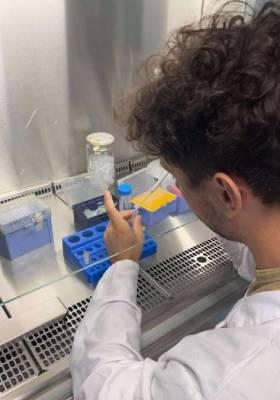
Created by MIT in 2003, iGEM—the International Genetically Engineered Machine competition—is the world’s largest student synthetic biology competition. This year, 446 teams from 40 countries presented their projects to an international panel of judges between 28 and 31 October, with 4,500 people taking part in the event. The Grenoble-based ExoSPY project obtained the silver medal in the competition.

The team comprises ten students from UGA’s Faculty of Pharmacy, Grenoble INP – Phelma, UGA and the Bachelor of Technology programme in Multimedia and Internet Professions in Chambéry. Together, they decided to tackle one of the deadliest and most difficult cancers to detect: pancreatic cancer. Their project, named ExoSPY, aims to detect the disease at an early stage using exosomes—tiny vesicles released by cells—which have been modified to act as “spies”. The surface of these exosomes carries a protein capable of binding to claudin-4, which is found on the surface of cancerous tissues and is accessible due to their high porosity.

 The students also loaded the exosomes with gadolinium particles, a contrast agent used in medical imaging. Once attached to abnormal cells, the exosomes release the marker, making precancerous lesions detectable by MRI.

Towards more targeted radiotherapy


The project also includes a therapeutic component: the exosomes are additionally loaded with gold nanoparticles. During radiotherapy, these particles heat up when exposed to X-rays, enhancing the treatment’s effectiveness while reducing the required radiation dose.
“Our objective is twofold: to diagnose pancreatic cancer as early as possible and to offer a targeted therapy that improves patients’ prognosis,” explains Héloïse Ployon, a third-year engineering student at Grenoble INP – Phelma, UGA.


A valuable collaborative learning experience
 

To achieve these results, the students conducted an extensive literature review, designed computer models and carried out numerous laboratory experiments on cell lines. The first irradiation tests are currently under way at the Grenoble Institute of Neuroscience.

Beyond the scientific work, iGEM also requires a major communication effort, including the creation of a website (https://2025.igem.wiki/uga/), video production, presentations in secondary schools and participation in France’s national Science Festival. “This project exposes us to real-life research challenges and teaches us how to manage a project from start to finish,” says the student.

Supported by Grenoble INP, the Grenoble INP Foundation, UGA’s Faculty of Pharmacy and several academic and industrial partners, the students entered the final hoping to win a medal. Their open-science project can now be taken up by other researchers and developed further towards clinical applications. It represents a valuable contribution to the fight against a cancer whose incidence is rising sharply and which is expected to become one of the world’s leading causes of cancer-related death.


Recueil d'articles