


UroMems: from the laboratory to medical innovation

A spin-off from the TIMA and TIMC, UroMems is developing the world’s first active, customisable implant for treating stress urinary incontinence. Following a record-breaking funding round in 2024, the start-up is now preparing to take a decisive step towards bringing its device to market.
The UroMems story began in two Grenoble laboratories: TIMA*, which specialises in micro- and nanosystems, and TIMC**, which operates at the interface between engineering and biology. An ambitious idea emerged from the combination of their expertise: using microelectromechanical systems (MEMS) to design an intelligent implant capable of restoring urinary control in patients. “We produced the first proof of concept in these laboratories while I was completing my PhD in Grenoble,” recalls Hamid Lamraoui, now founder and CEO of UroMems. A graduate of the École Supérieure d’Ingénieurs de Luminy—now Polytech Marseille—and holder of a PhD from Université Grenoble Alpes, he continued his research in collaboration with Pitié-Salpêtrière Hospital in Paris before founding the start-up in 2011.
 

A device unlike any other in the world

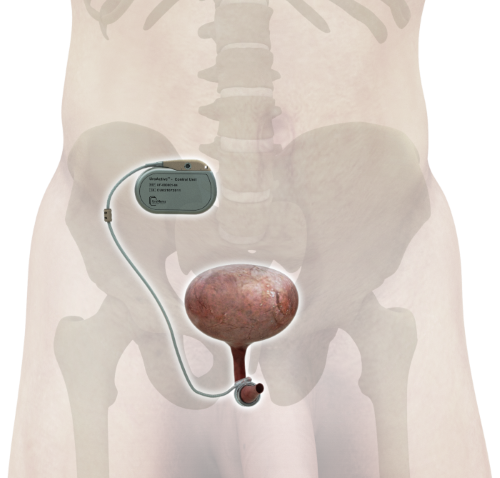
The implant developed by UroMems is based on a pioneering myoelectromechanical system: an implantable artificial muscle inspired by the natural functioning of human muscles. Unlike existing solutions, which are passive and difficult to adjust, the device adapts in real time to the patient’s physiology and activity. Its robustness meets the reliability and safety standards applied to pacemakers, while offering unparalleled autonomy and ease of use. “The device is controlled simply using a remote control, without any complex manipulation or surgical procedure,” explains Hamid Lamraoui.

Beyond the immediate improvement in patient comfort, the device also offers significant potential for further development. It automatically collects data that, once anonymised, could be used to optimise therapy through artificial intelligence. “We are the only company able to use the data generated by the implant, which will pave the way for increasingly personalised treatments,” emphasises the CEO.

Moving towards international commercialisation

Following an initial pilot clinical study involving twelve patients—six men and six women—UroMems is preparing a larger-scale study, an essential step towards obtaining market approval. At the same time, its teams are finalising the industrialisation of the device to ensure manufacturing reproducibility and enable production to be scaled up.

The company currently employs 65 people across France and the United States and expects this figure to reach 75 by the end of the year. Its ambitions are international, with CE marking targeted for Europe and FDA approval for the United States. The €44 million raised in 2024 will provide crucial support in achieving these milestones.
 

A technology platform for the future

Although urinary incontinence remains UroMems’ current priority, the potential applications of its technology extend far beyond this condition. The mechatronic platform it has developed could be adapted to address other medical indications, just as pacemakers have evolved into neuromodulation devices. “We have laid the foundations for a technology that could interface with other implantable systems and address a wide range of medical needs,” concludes Hamid Lamraoui.

* CNRS / UGA / Grenoble INP - UGA
** CNRS / UGA / VetAgro Sup / Grenoble INP - UGA / CHU Grenoble Alpes