

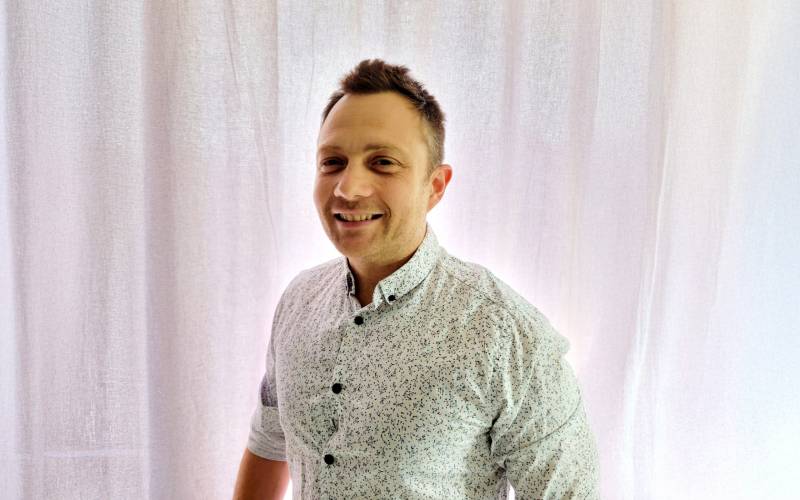
Guilhem Martin, a passionate metallurgist dedicated to research

Guilhem Martin has recently been appointed a junior member of the Institut Universitaire de France (IUF). This distinction will provide him with a reduced teaching load, allowing him to devote more time to his research in metal additive manufacturing.
At the age of 39, Guilhem Martin is an Associate Professor at Grenoble INP – UGA, teaching at Polytech Grenoble – INP, UGA and conducting his research at the SIMaP laboratory*. His academic career has been firmly rooted in Grenoble. After attending La Prépa des INP, the preparatory programme leading to engineering degrees within the INP Group, he continued his studies at ENSEEG, which subsequently became Grenoble INP – Phelma, UGA, where he specialised in materials science. It was during this period that he developed an interest in metallurgy, inspired by leading scientists such as Yves Bréchet. This interest led him to pursue a PhD in collaboration with ArcelorMittal, now Aperam, on the workability of duplex stainless steel flat products. Under the supervision of Yves Bréchet and Muriel Véron, his doctoral research involved collaborations with researchers at UCLouvain, the University of Sheffield and the LMS laboratory in Paris (Laboratoire de mécanique des solides, École Polytechnique).

After an 18-month postdoctoral fellowship at the University of British Columbia in Vancouver, Canada, he returned to Grenoble in 2013 as an Associate Professor. This marked the beginning of a new scientific venture in metal additive manufacturing, driven by the convergence of research interests among several Grenoble-based research groups, notably at the SIMaP and G-SCOP laboratories*. This collaboration ultimately led to the acquisition of one of the first electron beam powder bed fusion (EB-PBF) machines installed in France. Guilhem Martin became part of this collective endeavour, bringing his extensive expertise in metallic materials. As he explains: “I would like to emphasise that I joined a highly supportive environment, within a laboratory and a research team that provided me with the resources and freedom to develop my research. I therefore see my appointment to the IUF as recognition of a collective achievement.”
 

Advancing metallurgy through additive manufacturing

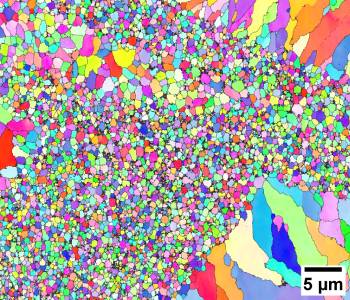
Rooted in physical metallurgy, his research focuses on the relationships between manufacturing processes, microstructures and mechanical properties. In particular, he investigates how the processing conditions involved in additive manufacturing—which differ markedly from those of conventional manufacturing techniques—can profoundly alter material microstructures. “Some alloys cannot withstand the thermal stresses generated during these processes,” he explains. “We therefore need to adapt the material to the process and develop new compositions that can be successfully manufactured, while simultaneously seeking improved performance and minimising the need for post-processing steps, such as heat treatments and machining.”

Conducted in close collaboration with industrial partners including Aubert & Duval, Constellium, Framatome, EDF and Schneider Electric, his research addresses the challenges faced by strategic sectors such as aerospace, biomedical engineering and energy. His IUF appointment will now give him the opportunity to devote more time to fundamental research, using model alloys to gain a better understanding of the phenomena observed in more complex industrial materials.

Exploring microstructures and their properties

In addition to developing new materials, Guilhem Martin is investigating how different properties can be tailored within a single metal component. This can be achieved by locally controlling its microstructures through the optimisation of the melting strategies used in 3D printing. To conduct this research, he draws on SIMaP’s advanced manufacturing equipment, including powder bed fusion machines, and state-of-the-art characterisation facilities: 3D X-ray tomography, X-ray diffraction, scanning and transmission electron microscopy, and atom probe tomography. He also makes extensive use of Grenoble INP – UGA’s CMTC characterisation platform and benefits from close links with the European Synchrotron Radiation Facility (ESRF). “These tools are essential for investigating the highly out-of-equilibrium, ultrafine microstructures inherited from additive manufacturing,” he says. Convinced of the importance of sharing knowledge, he also integrates these emerging technologies into his teaching. His aim is to provide students with a renewed perspective on metallurgy, one that is more closely aligned with today’s industrial challenges. “It is an excellent way to revisit fundamental concepts in physical metallurgy and to demonstrate their relevance to emerging manufacturing technologies,” he concludes.

*CNRS / UGA / Grenoble INP - UGA
** UGA / Grenoble INP - UGA / USMB


Recueil d'articles