

Glue-free furniture thanks to wood’s natural properties

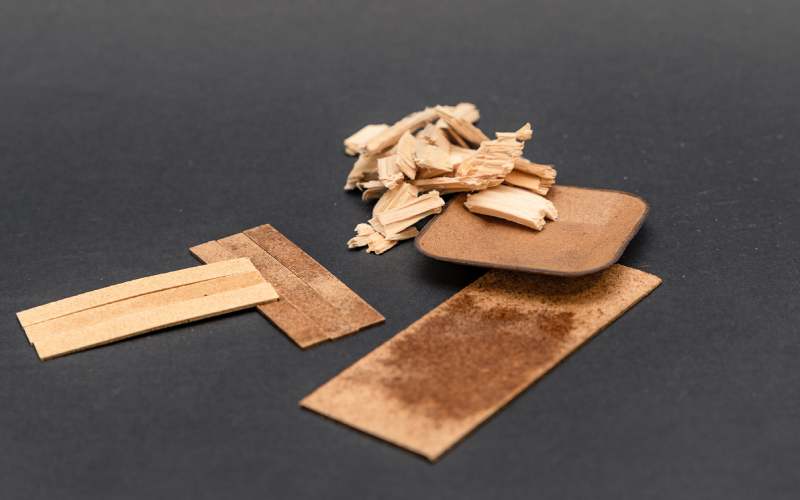
At LGP2, Annabelle Julien is developing a process for manufacturing wood panels without any chemical binders. This approach addresses the health and environmental issues associated with industrial adhesives.
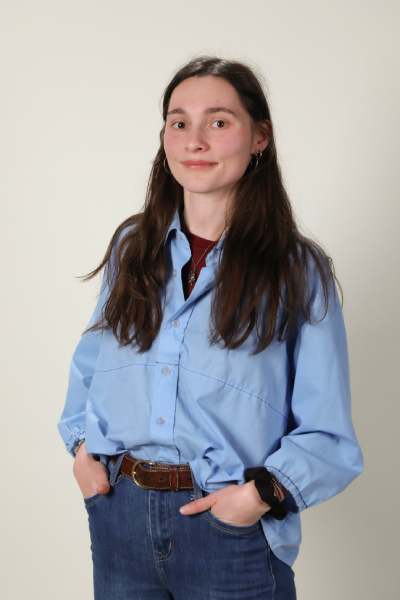
In our kitchens, offices and bedrooms, almost all furniture made from engineered wood contains an invisible substance: glue. Ubiquitous particleboard and medium-density fibreboard (MDF) are manufactured by mixing wood particles or fibres with synthetic resins before pressing them at high temperatures. Although this well-established process produces strong panels at low cost, it now raises public-health concerns. This is precisely the problem that Annabelle Julien, a third-year PhD student at LGP2*, is seeking to solve.
 

Adhesives under growing regulatory scrutiny

The adhesives used in particleboard emit volatile organic compounds (VOCs), which affect indoor air quality. Some of these substances are now classified as CMR—carcinogenic, mutagenic or toxic to reproduction—and are subject to increasingly stringent European regulations.

Recycling is also problematic: adhesive residues remain attached to the wood particles and are extremely difficult to remove at the end of the product’s life. Researchers are even exploring the use of fungi to decontaminate these particles. For Annabelle Julien, however, the most radical solution is also the most obvious: not using glue at all. “These adhesives emit volatile organic compounds into our homes. Some are now classified as carcinogenic, mutagenic or toxic to reproduction.”
 

Wood contains its own natural binders

Wood consists of three natural polymers: cellulose, hemicelluloses and lignin. The latter two are described as “amorphous”: when exposed to heat, they soften just as plastic does. This phenomenon, known as the glass transition, occurs between 180°C and 220°C. Below this range, wood remains rigid; above it, the material begins to degrade.

Annabelle Julien is working within this narrow temperature window. By combining high temperatures with extreme pressures—up to 100 megapascals, ten times the pressure used in conventional industry—she forces the wood particles to bond together. The softened polymers fill the gaps and, as they cool, solidify the entire structure. All without a single gram of glue. “We are making use of what wood already contains: polymers that soften when heated and bond the particles together.”
 

Meeting the standards—with water resistance still a challenge
 

The test specimens manufactured at LGP2 successfully pass the standardised mechanical tests for particleboard: their bending performance meets—and sometimes exceeds—the requirements. More complex shapes have also been produced, including packaging trays and small 3D objects with constrained geometries. As long as a suitable mould is available, the process can be adapted.

One limitation remains, however: water resistance. After 24 hours of immersion—a crucial standardised test for particleboard—the samples swell beyond the permitted thresholds. This weakness is not specific to this approach: it affects almost all the “glue-free” solutions currently under development worldwide, whether they are based on proteins or other bio-based binders.

Potential solutions are available. Lignin is naturally hydrophobic and is produced in large quantities as a by-product of the paper industry. “Adding extra lignin to the panels could significantly improve their moisture resistance. This is one of the avenues that future research should explore as the project continues.”
 

Fundamental research with practical applications

Launched as part of the ANR-funded DRYBIOMAT project led by Quentin Charlier, an Associate Professor at LGP2, this research forms part of a broader effort to develop bio-based materials using dry processes—in other words, without water or solvents—to reduce energy consumption and environmental impact. Other teams, particularly in Toulouse, are obtaining comparable mechanical results using straw or rice residues.

Scaling the process up to industrial production would require partnerships with companies and larger pressing equipment. However, the primary aim of the PhD is to build a fundamental understanding of the process—an objective that Annabelle Julien, whose thesis defence is approaching, has almost achieved already.


* CNRS / UGA / Grenoble INP – UGA / Agefpi


Recueil d'articles