
CAPION: a bio-inspired battery offering a new approach to energy storage

What if the batteries of the future took inspiration from living systems? Donald Martin, a UGA Professor and researcher at LMGP*, is developing an energy storage device based on biological ion gradients. Supported by two ERC grants, the technology could power a device for a month without recharging.
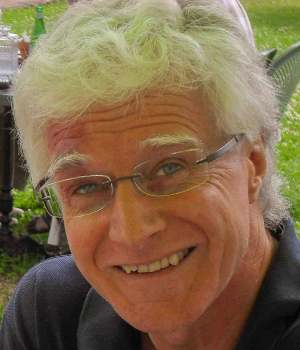

Connected devices, sensors, medical equipment… these types of technologies include batteries at their heart. Batteries still have numerous limitations, including their environmental impact, risks associated with their materials and the difficulty of integrating them into miniaturised systems. To overcome these challenges, Professor Donald Martin is developing a radically new approach: drawing inspiration from the way living cells store energy.

He arrived in France from Australia in 2009 after being awarded a Chair of Excellence, and initially conducted his research at the TIMC laboratory**, before recently joining the LMGP* laboratory  hosted by Grenoble INP – UGA. “The project now requires a strong focus on materials science and engineering. LMGP provides this environment, complementing the more clinically oriented approaches developed at TIMC,” he explains.
 

Two ERC grants to accelerate the project

His research was recognised with an ERC*** Advanced Grant worth €2.9 million, commenced in November 2024. The funding supports his Energion project, which aims to lay the scientific foundations for a new method of energy storage. Building on this work, Donald Martin has also received an ERC Proof of Concept grant from May 2026, providing €150,000 over 18 months. This second project, named CAPION, is dedicated to translating the results of the ERC Advanced Grant into practical applications. Its objective is to turn a scientific proof of concept into a functional prototype.

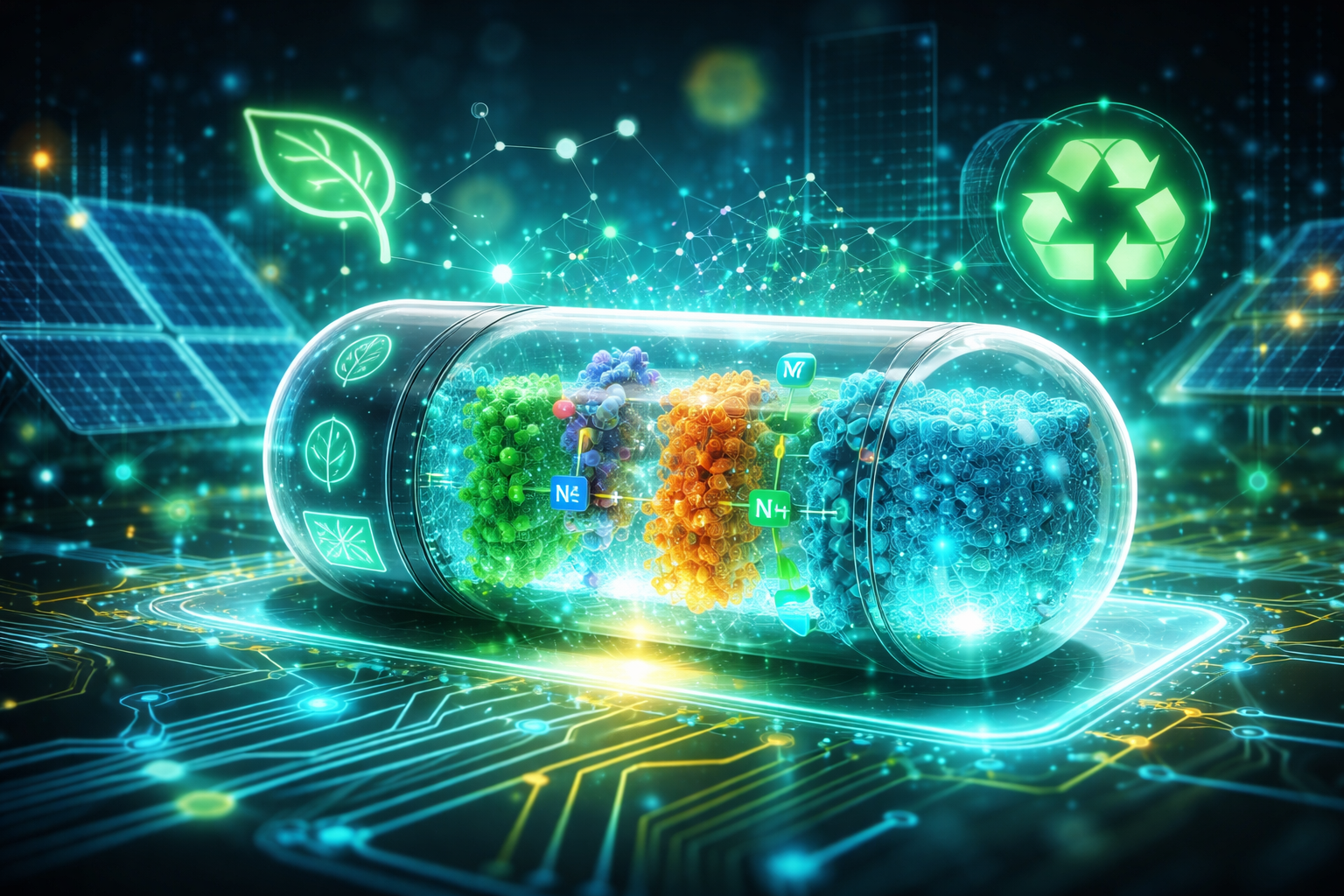
Unlike conventional batteries, which rely on oxidation-reduction reactions, the device developed through CAPION stores energy in the form of stable ion gradients, mirroring the mechanisms used by biological cells. These gradients are generated using bio-inspired architectures incorporating membrane proteins capable of controlling the movement of ions. “We are seeking to reproduce, within an artificial system, the way living organisms transport and store energy. This opens up a new paradigm for energy technologies,” Donald Martin emphasises.

Initial research conducted as part of the Energion project has already demonstrated the feasibility of the concept, with levels of energy storage already equivalent to small alkaline batteries.

A prototype capable of operating autonomously for a month

With CAPION, the ERC team—currently comprising five people and set to be strengthened by the recruitment of an engineer and the support of a team specialising in business development—is moving on to the next stage: developing an energy module capable of powering a real electronic device.

The aim is to demonstrate continuous operation for at least one month, without external recharging or self-discharge. Such performance would be particularly well suited to constrained environments where access to an energy source is limited or impossible.

In the longer term, this technology could find applications in numerous fields, including implantable medical devices, autonomous sensors, connected objects and embedded electronics. It also offers several major benefits: no rare metals, improved safety with no risk of thermal runaway, and greater recyclability.

At a time when several billion batteries are used worldwide every year, with a significant environmental impact, this research is paving the way for more sustainable solutions. “We are exploring a new generation of energy systems inspired by living organisms, which are safer and potentially better suited to the needs of the future,” the researcher concludes.


*** European Research Council 
** CNRS / UGA / VetAgro Sup / Grenoble INP – UGA
* CNRS / UGA / Grenoble INP – UGA 

AI-generated illustration (credit: Adobe Stock)


Recueil d'articles