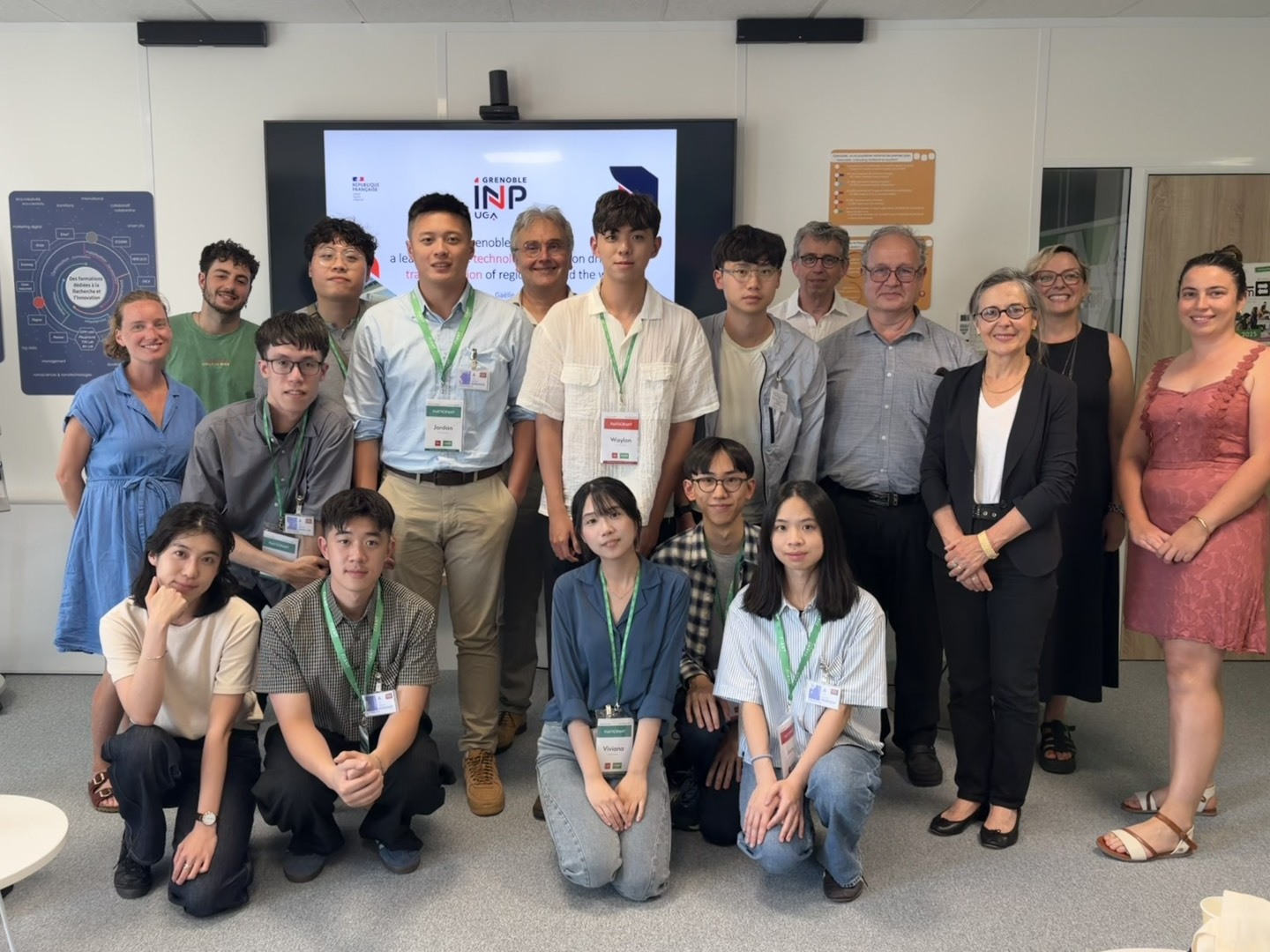
Tuesday, June 16, 2026, Grenoble INP – UGA welcomed a delegation of ten young Taiwanese people aged 18 to 30, participating in the Taiwan Global Pathfinder Semiconductors program. This initiative, coordinated by the French Office in Taipei (BFT) with the support of Jean-Christophe Bonté, scientific development officer at the CEA, is part of a series of seven Pathfinder projects. The semiconductor focus naturally led to identifying Grenoble as the host location.
The delegation is immersed in Grenoble for two weeks, from June 15 to 28, to discover from the inside the interactions between research, education and industry that structure one of Europe's most dense microelectronics ecosystems. The day of June 16, organized by Grenoble INP – UGA, was a key milestone in this journey.
A selection from over 100 applications
The ten participants were selected from more than one hundred applications, reflecting the growing appeal of Grenoble among Taiwan's young scientific community. Bachelor's and Master's students, as well as young professionals at the start of their careers, their profiles cover the entire semiconductor value chain: materials, integrated circuit design, manufacturing and industrial strategy.
Universities represented in the delegation
- National Taiwan University (Taipei): decision-making and academic functions
- National Tsing Hua University (Hsinchu): heart of the Taiwanese science park
- National Cheng Kung University (Tainan): advanced technologies and industrial capabilities
- National Yang Ming Chiao Tung University (Hsinchu): IC design and foundries
This selection covers the three major academic and technological hubs of the island, which also shape the industrial geography of semiconductors in Taiwan. A cohort that reflects, according to the program's official presentation, "the entire national industrial ecosystem, from upstream training and research through to integrated semiconductor value chains."
A program at the heart of the INP – UGA ecosystem
Grenoble INP – UGA designed a program aimed at giving the taiwanese delegation a cross-sectional view of the institution and its partners, from research chairs to start-ups, from incubators to shared technology platforms, and through European alliances:
- Sustainable Electronics Chair: presentation of the challenges of energy-efficient electronics and the research directions of the chair led by Grenoble INP – UGA.
- Doors Photonics : from a Master's project to a start-up: the journey of Jean-Emmanuel Broquin, an entrepreneur from Grenoble INP – UGA in the field of integrated photonics.
- InoPulse : the "Right Tech" incubator run by Grenoble INP – UGA for the Université Grenoble Alpes, designed to support deeptech innovation and entrepreneurship for students.
- S.mart : the university technology center offering expertise and state-of-the-art equipment for the development of industrial projects, at the intersection of research and technology transfer.
- Unite! : the strategic European university alliance of which Grenoble INP – UGA is a partner, a network opening up collaboration opportunities across the continent.
- International outreach: the institution's international policy and the levers for cooperation with Asian players in the semiconductor sector.
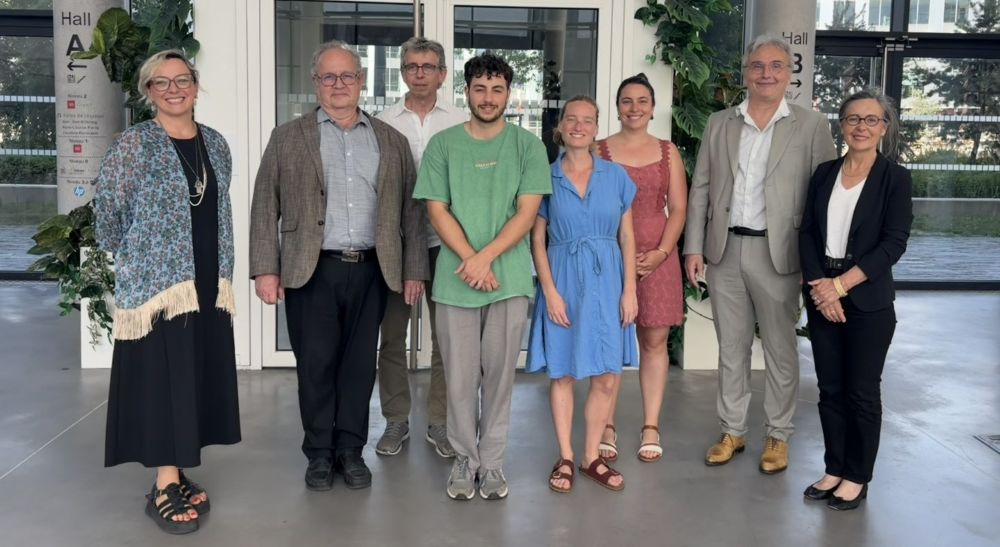
Grenoble: a unique integrated model in Europe
The Taiwanese visitors came to observe a rare model: the co-location within a single territory of academic research laboratories, pilot manufacturing lines, major industry players and an engineering school training the talent that feeds this chain. The GIANT campus, which brings together scientific and academic centers of excellence including the CEA, CNRS, Grenoble Alpes University, Grenoble INP – UGA and several industrial actors, embodies this unique density.
For the Grenoble ecosystem, this cohort represents a strategic long-term asset. These ten participants are already well acquainted with Grenoble's strengths: technological integration, industrial transfer and deeptech innovation. In a sector where alliances are decisive, and given that Taiwan produces more than 90% of the world's most advanced semiconductors, this dynamic represents a major opportunity to strengthen international cooperation.
The delegation continues its immersion in Grenoble until June 28, with visits to technology platforms, meetings with industry players, and a cultural dimension allowing them to discover the city and its region.