

Weimar Triangle: Universities at the Heart of European Integration
Grenoble INP – UGA and the Unite! alliance in Warsaw for the conference “Shaping Europe: The Role of Universities in the Weimar Triangle”
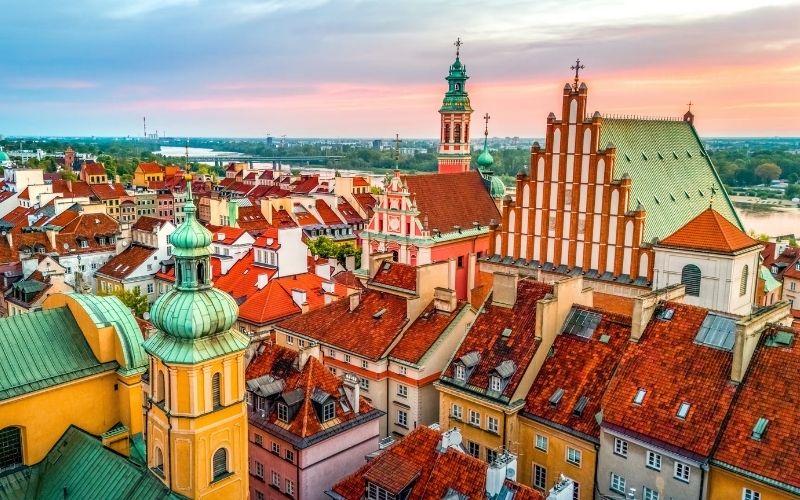
Grenoble INP – UGA and the Unite! alliance in Warsaw for the conference “Shaping Europe: The Role of Universities in the Weimar Triangle”
On 24 and 25 September 2026, the University of Warsaw hosted the trilateral conference Shaping Europe: The Role of Universities in the Weimar Triangle – Trilateral Conference on European University Alliances. Over two days, university leaders, institutional representatives and diplomats from France, Germany and Poland gathered around one question: how can university collaboration within the Weimar Triangle be strengthened in the era of European university alliances?
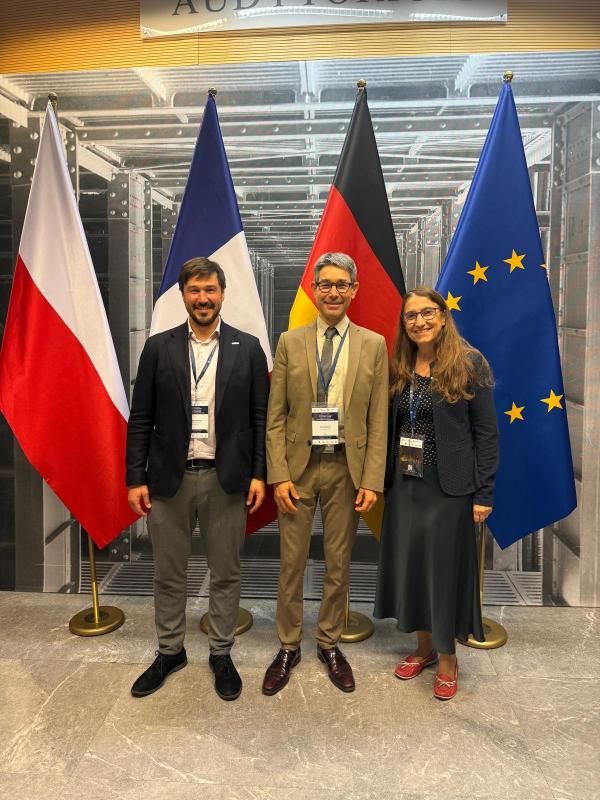
Grenoble INP - UGA was present, alongside the European alliance Unite!, which Vivien Quéma, Managing Director of Grenoble INP - UGA, currently chairs. The institution was represented by Vivien Quéma and Gülgün Alpan, Vice-President for International Affairs.
Created in 1991, the Weimar Triangle brings together France, Germany and Poland around a political dialogue and concrete cooperation, of which the university sector is today one of the most active vectors. Of the 74 European university alliances, 28 include partners from these three countries.
Organised by the University of Warsaw with the support of the French and German embassies in Poland, the DAAD (the world's largest organisation for the promotion of international academic and scientific exchange), Campus France, the NAWA (the Polish National Agency for Academic Exchange) and the French Institute in Poland, the conference was an opportunity to take stock of these dynamics and outline shared perspectives.
The conference brought together many prominent figures:
The first day, held in the heart of the University of Warsaw's historic campus, opened with welcome speeches by the Rector, Professor Alojzy Z. Nowak, the ambassadors of France and Germany, and the Polish Under-Secretary of State.
The keynote address, on the geopolitical dimension of European university alliances, was given by Professor Emmanuelle Garnier, President of the University of Toulouse - Jean Jaurès.
Two round tables then structured the discussions:
The second day took place on the Dobra Street campus, in the form of parallel workshops devoted to exchanging good practices:
The alliances shared their experiences, notably on joint degrees, governance models and shared digital infrastructures.
This conference was a valuable opportunity for Grenoble INP - UGA to:
These exchanges will feed into the reflection and actions of Grenoble INP - UGA within Unite!, in order to build a more integrated, more open and more resilient European higher education and research area.