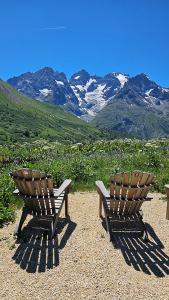


When the Alps become your classroom
Five Unite! students. One week in the French Alps. An experience that stays with you.
Five Unite! students. One week in the French Alps. An experience that stays with you.
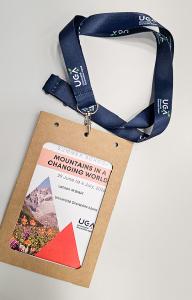
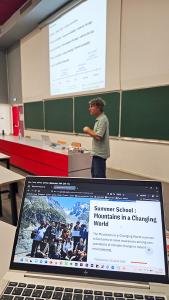
Five students from TU Darmstadt, Aalto University, and TU Graz spent a week in late June 2026 studying the tangible impacts of climate change across mountain landscapes. Here is what the sixth edition of Mountains in a Changing World, organised by the Faculty of Sciences of Universite Grenoble Alpes, looked like from the inside.
The programme ran from 29 June to 4 July, based in Grenoble with several days spent in the field. It covered the full arc of what is happening to mountain environments: how the Alps formed, how glaciers have retreated, how avalanche and flood risks are shifting, and what all of this means for the people and communities that depend on the mountains.
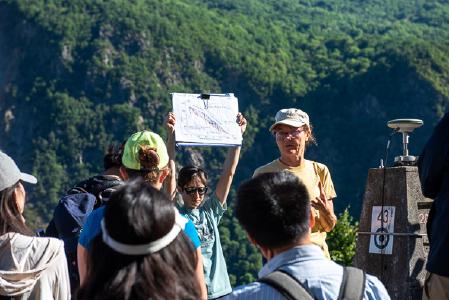
The sessions were led by researchers of Université Grenoble Alpes who work on these questions every day: geologist Pr. Christian Sue, geologist and programme organiser Pr. Pascale Huyghe, climatologist Dr. Martin Menegoz and others. But the real power of the week was getting out of the classroom.
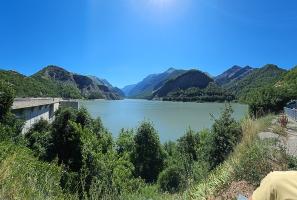
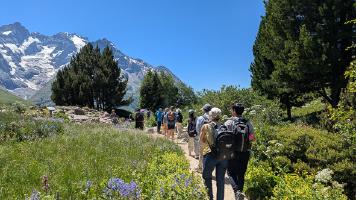
Two days in the Oisans massif took participants to 2,000 metres to read the geology of the Alps first-hand, then down into the valley of the Romanche river to observe landslide dynamics that are influenced by warming. On 2nd of July, the group visited the Jardin du Lautaret, a botanical garden managed by UGA and the CNRS at 2,100 metres, where botanist Dr. Rolland Douzet walked them through 2,000 alpine plant species, a living record of how mountain ecosystems are shifting. The week ended in Chamonix, at the Mer de Glace: France's largest glacier, visibly diminished. Local glaciologist put the retreat into numbers. The numbers were striking.
Beyond the natural sciences, the programme explored what the mountains mean for tourism, adaptation policy and cultural heritage, including a presentation from the Ice Memory Foundation, which is collecting ice cores for future scientific experiments and climate modelling from endangered glaciers before they disappear for good.
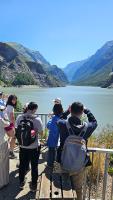
This year, five students from Unite! partner institutions took part:
Six disciplines, five countries, one week together. They attended lectures alongside students from other universities, went into the field as a group, and on the final Friday afternoon presented their findings in teams. That mix of backgrounds made the discussions richer than any single-discipline programme could.
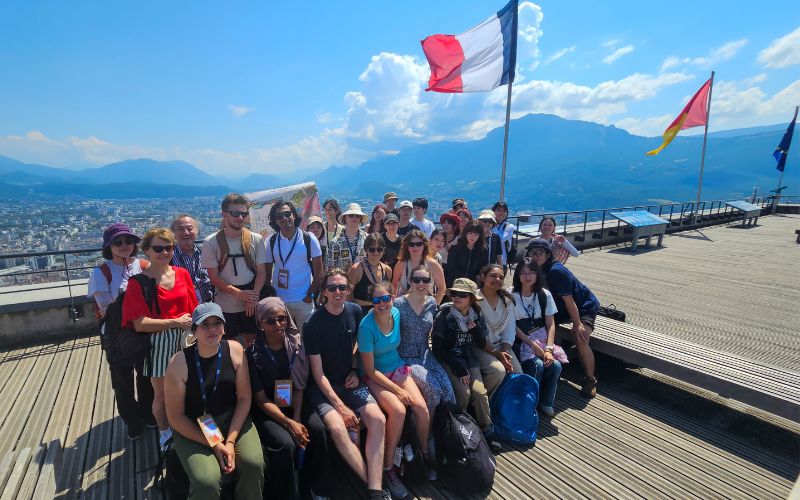
Grenoble is not just a backdrop. Designated European Green Capital 2022, it is a city where the mountains are genuinely part of daily life. A session at the Bastille, the hilltop fort above the city, gave participants a panoramic view of the Chartreuse, Vercors, and Belledonne ranges and a first taste of why people here do not just study the Alps. They live in them.
A week like this does not happen without people who care about it. The Unite! Alliance extends its sincere thanks to Pascale Huyghe and Clara Meissimilly of Universite Grenoble Alpes, whose work made the 2026 edition possible.
Dates for the 2027 edition of Mountains in a Changing World will be announced shortly. If you are a master's student at a Unite! partner institution and want to spend a week in the Alps working on real environmental challenges alongside researchers and students from across Europe, this programme is for you.
Registration through the Unite! student catalogue on Agora. Places are limited.
Mountains in a Changing World is organised by the Faculty of Sciences of Universite Grenoble Alpes.
More information: faculte-sciences.univ@grenoble-alpes.fr